


 Our Research

-
Nature Communications | 我院胡家志实验室揭示线粒体DNA片段可广泛整合入核基因组
2024年11月1日,北京大学生命科学学院、北大-清华生命科学联合中心、北京大学成都前沿交叉生物技术研究院胡家志实验室及合作者在Nature Communications发表了标题为:Transfer of mitochondrial DNA into the nuclear genome during induced DNA breaks的研究论文。该项研究中作者采用实验室前期开发的用于系统分析基因编辑产物的高通量测序方法——PEM-seq1,发现在核基因组编辑过程中,线粒体DNA片段可能插入到靶向位点,与此...
-
【Chemical Science】我院王初实验室发展了一种高效的EVs蛋白质组学分析流程用于结直肠癌的早筛早诊
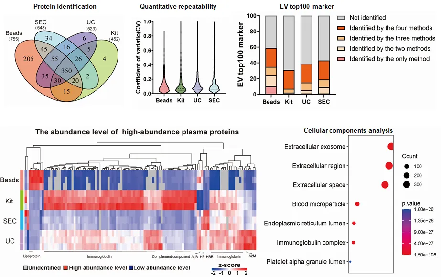
近日,北京大学化学与分子工程学院、北大-清华生命科学联合中心、北京大学成都前沿交叉生物技术研究院王初实验室与北医三院林坚课题组、北京大学首钢医院顾晋课题组在Chemical Science杂志上合作发表了题为“A simplified and efficient extracellular vesicle-based proteomics strategy for early diagnosis of colorectal cancer”的研究文章。在这项工作中,作者们建立并优化了一种高效的胞外囊泡(Extracellular vesicles...
 Lasted News
 Announcement
 科研进展
科研进展 科研成果
科研成果


 Core Metrics



 Laboratory
-
Anti-aging Research Laboratory
Peking University Boya Distinguished ProfessorPrincipal Investigator, Peking-Tsinghua Center for Life SciencesRecipient of The National Science Fund for Distinguished Young Scholars of ChinaRecipient of “ Hundred Talents Program” from The Chinese Academy of SciencesRecipient of “The National New Century Talents Project” of China

-
Cell-free Epi-diagnostics and Drug Multi-omics Laboratory
The laboratory is clinically oriented, focusing on the development of novel, high-throughput, highly sensitive, and non-invasive epigenomics liquid biopsy and single-cell small molecule drug target detection technologies. The lab strives to establish a globally leading, pan-cancer non-invasive diagnostic and therapeutic platform. The supersensitive cf-EpiTracing technology in a blood drop and scEpiChem in detecting small molecule drug targets will transform the related clinical practice, establishing the leadership of precision medicine worldwide.

-
Immunogenomics Laboratory
The immune system protects us from infection or diseases by effectively eliminating pathogens. Lymphocyte receptors, including the B cell receptor (secreted as an antibody) and T cell receptor, target B or T lymphocytes to pathogens and initiate the activation of the adaptive immune response. Lymphocyte receptors show high diversity upon generation and high specificity when recognizing antigens and thus become the most diverse system in humans. Immunogenomics refers to a new branch of molecular immunology that employs genomics methods to study the adaptive immune response based on lymphocyte receptors. Our major research interest is to develop and use genomics assays to investigate the mechanism underlying the diversification of lymphocyte receptors and uncover the two main mysteries in molecular immunology that are allelic exclusion and immune selection of lymphocytes. Lymphocytes protect us from disease, but genome instability can also convert normal lymphocytes to lymphomas or leukemia cells. Therefore, we also focus on how to maintain the genome integrity of lymphocytes.

-
Intelligent Biomolecular Design and Development Laboratory
This laboratory is dedicated to advancing the frontiers of drug discovery by developing cutting-edge methods and proprietary computational tools to uncover novel drug candidates to address unmet clinical needs.


-
Synthetic Biology Laboratory
The laboratory is dedicated to the application of synthetic biotechnology in the research and development of advanced biopharmaceuticals, including nucleic acids, proteins, and viral-based therapeutics. By integrating state-of-the-art technologies such as synthetic biology and artificial intelligence, the laboratory aims to achieve significant breakthroughs in areas such as the identification of novel disease targets, the design and optimization of synthetic biological components, and their functional validation. These efforts are intended to provide essential support for the advancement of innovative biopharmaceuticals.
-
Novel Boron-containing Drugs Laboratory
The laboratory aims to solve the bottleneck problem of boron-containing drugs for boron neutron capture therapy (BNCT for short) in China and achieve technological advancements. It focuses on selecting a series of novel boron drug molecules with independent intellectual property rights, cutting-edge designs, and superior therapeutic effects for clinical transformation. This effort will help China transition from following to leading in the global BNCT field.
-
Quantitative and Systems Biology Laboratory
The laboratory is dedicated to interdisciplinary fields such as biology, mathematics, physics, and computer science, focusing on developing and applying quantitative methods and tools. Through cross-disciplinary quantitative research on biological systems, it aims to uncover the quantitative principles and structural fundamentals of the biological world and apply them to the field of life and health. By integrating network dynamics analysis, complex system modeling and computation, as well as artificial intelligence methods for biological systems, the laboratory develops next-generation diagnostic and therapeutic technologies for complex diseases like cancer and metabolic disorders.
-
Clinical Chemoproteomics Laboratory
The laboratory isestablished towards solving the core technological problems in the process of clinical diagnosis and drug development. It aims to develop a series of cancer biomarkers, tumor drug targets and leading drug compounds by establishing high-throughput, high-content androbust quantitative chemical proteome technologies,eventually toimprove our overall capabilities in early diagnosis and treatment of major diseases, as well as in the independent innovation of drug development.




-
Gene Detection and Editing Laboratory
Our laboratory, positioned at the forefront of global biotechnology innovation, isdedicated to advancing human life and health. Through interdisciplinary integration of life sciences, chemistry andmedicine, we developed proprietary gene detection and gene editing technologies. Thesebreakthroughs empower us to pioneer liquid biopsy solutions for cancer andbirth defects, as well as RNA-based therapies for genetic diseases, aiming to provide safe and effective novel strategies for addressing major human health challenges.
-
Tumor Immunogenomics Laboratory
Zeng, ZexianPrincipal Investigator, Peking-Tsinghua Center for Life SciencesResearch Fellow, Center for Quantitative Biology, Peking UniversityResearch Field:The laboratory aims to provide new target genes for increasing the success rate of clinical immunotherapy, comprehensively revolutionize the discovery methods of tumor immunological targets, and innovatively conduct tumor immunological tar...
-
Metabolic Regulation and Diseases Laboratory
The primary goal of our laboratory is to develop advanced strategies for the diagnosis and therapeutic interventions for metabolic diseases and cancer. Our laboratory focuses on studying the regulatory mechanisms underlying lipid droplet-related disorders, and are devoting to developing innovative nucleic-acid and small-molecule drugs.



 Public Instrument Platform




 TEL: 028-60726555
 Add: No. 333 Xintong South Fourth Road, Hi-tech Industrial Development Zone, Chengdu